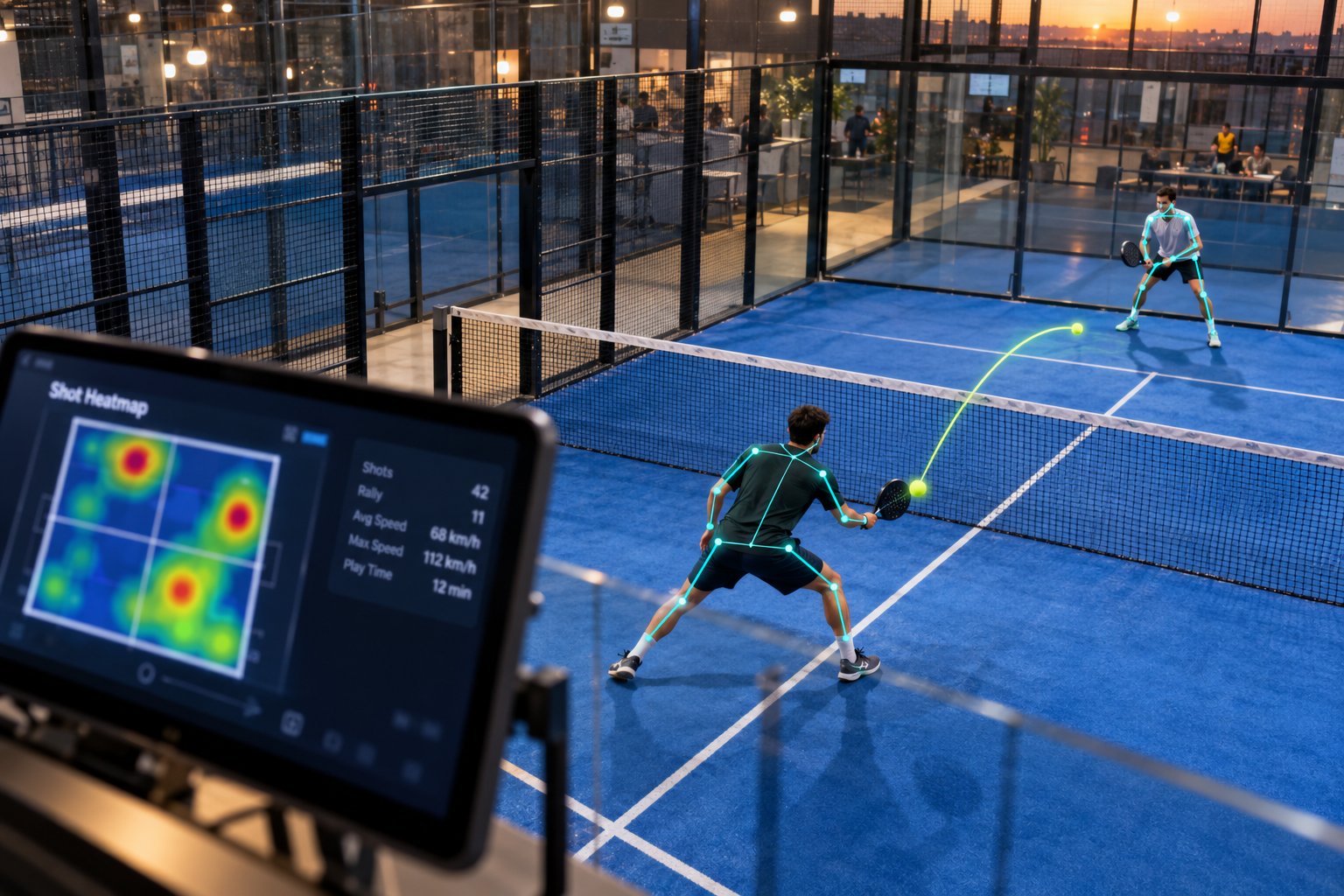
Sports footage is easy to collect and hard to make useful. Cameras can record every game, but raw analysis means little to a player deciding what to practise, or to a venue owner deciding what to invest in.
Athlyt is a sports technology product that analyses play using AI and turns it into insight for both players and venue owners. We built it with them, first in milestones and now under a long-term contract. Here is what we learned.
1. The real problem: insight, not footage
AI can produce a lot of analysis from video. The hard part is turning that analysis into something a non-technical person can act on.
A player does not want a table of numbers; they want to know what to work on. A venue owner does not want game-by-game statistics; they want to know how their courts and facilities are being used.
2. Two audiences, one product
- Players want to improve their game.
- Venue owners want to understand usage and performance across their site.
The challenge was to serve both from the same underlying analysis, without ending up with two separate products to build and maintain.
3. One analysis layer, two interfaces
Our answer was to separate the analysis from the presentation:
- The analysis models process the footage once and produce a shared set of results.
- Each audience gets its own interface on top. Players see what to work on. Venue owners see utilisation and performance across their site.
This keeps the AI in one place, so improvements to the models benefit both audiences at once, while each user sees only what matters to them.
4. Building in milestones
We started on a milestone-based engagement. Instead of committing to the whole product in one block, Athlyt could validate it in stages, checking that each piece worked and was useful before moving on.
For a new product, this reduces risk. If something needs to change direction, it changes after one milestone, not after the whole budget is spent.
5. From build to long-term partnership
Once the product was established, the engagement moved to a long-term contract covering ongoing maintenance.
This matters more for AI products than for ordinary software. The models and the product need to move together. When the product adds a feature, the models may need to change; when the models improve, the product should show it. With one team looking after both, they do not drift apart.
6. Lessons for building AI products for non-technical users
- Design around the decision the user makes: show players what to practise, not everything the model found.
- Separate analysis from presentation: one model layer can serve many audiences.
- Validate in milestones: prove each stage before committing more.
- Plan for after launch: AI products need ongoing care to stay useful.
Building an AI product that has to make sense to non-technical users? Talk to us.